Shame is a universal human emotion. It is not a personal flaw, and it is not proof that you are "not cut out" for this work. At its core, shame is often linked to belonging, identity, and the fear of being judged, rejected, or seen as "not enough". Sometimes it can act as a social signal that helps us notice when something matters deeply to us. And sometimes it can become painful, sticky, and isolating, especially when it is carried alone or reinforced by culture. You can read a masterful explanation of shame from The Shame Lab (opens in a new tab).
In veterinary medicine, shame can show up in ways that are easy to miss because they look like something else on the surface. It can sit underneath perfectionism, imposter feelings, over functioning, people pleasing, defensiveness, withdrawal, conflict in teams, fear of making mistakes, and the urge to hide or minimise what feels messy or human. It can also show up in our client interactions: when someone feels embarrassed, overwhelmed, afraid of judgement, or worried they will be seen as a "bad owner". When shame is in the room, conversations can become harder, even when everyone is trying their best.
This resources page exists to help us name shame with compassion and clarity. You will find accessible, evidence informed explanations and frameworks, reflection prompts, and links to further learning that can support individuals and teams to respond to shame more wisely. We are not here to claim shame can be "ended". The aim is to understand it better, reduce the unnecessary judgement that often comes with it, and support healthier culture and language in vetmed.
Bringing this to life in an inclusive way matters to us, so inspired by the wider Shame and Medicine movement, our blog exists to bring to life the breadth of different experiences of shame across vetmed and the many walks of life within it.
Resources
Here are a few accessible resources on shame that we have explored within the Shame and VetMed group, chosen because they explain complex ideas in a clear, compassionate, practical way. Please note: these are education resources, not support services or crisis resources, and we will keep adding to the list as our learning evolves.
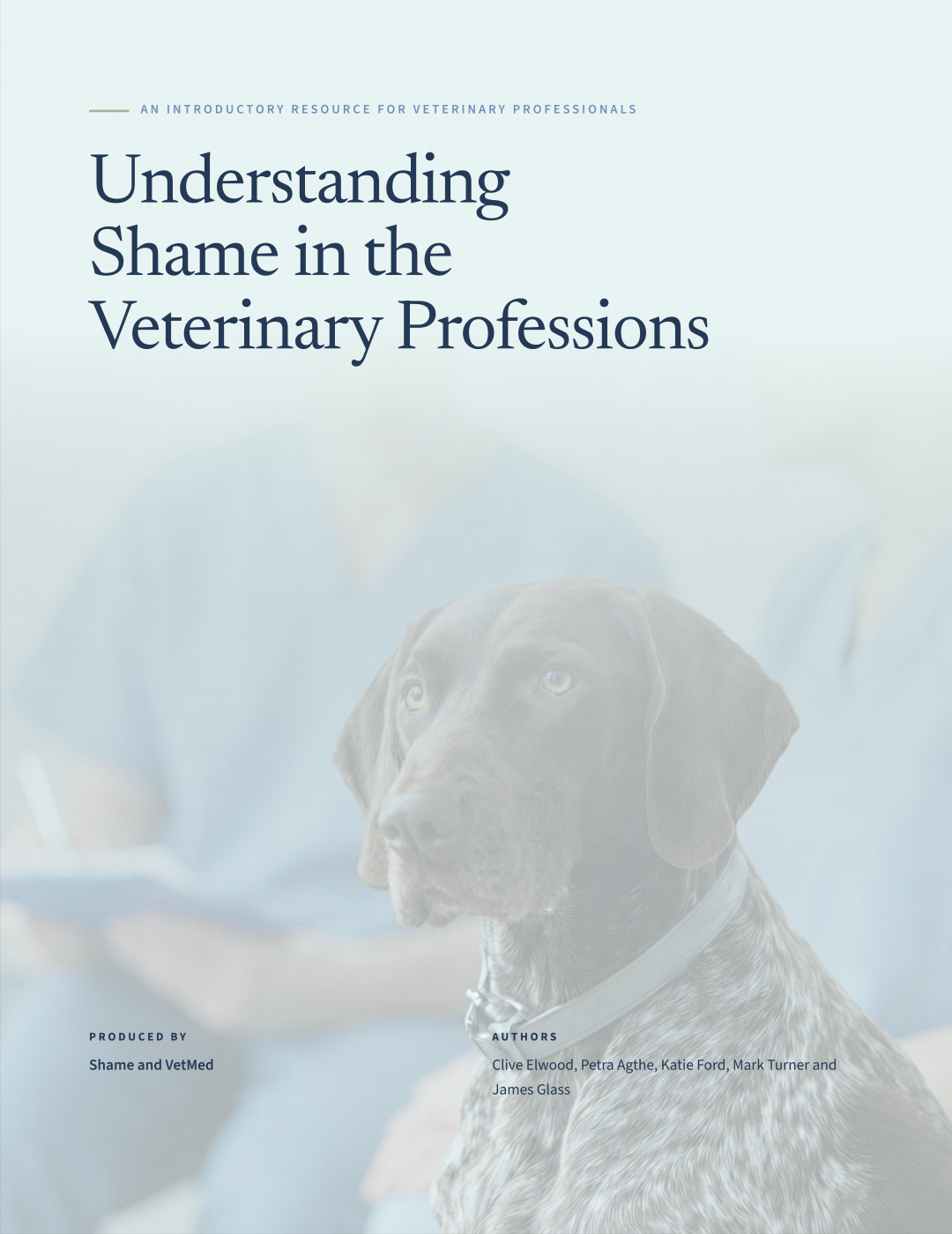
Download our guide: Understanding Shame in the Veterinary Professions
This PDF is a comprehensive, plain English guide to shame: what it is, how it differs from guilt, and the many ways it can show up in veterinary medicine and our client relationships. It was developed by the shame interest group behind Shame and VetMed, a multidisciplinary group of professionals including therapists, social workers, coaches, and leaders, with the aim of making this topic clear, nuanced, and genuinely understandable so we can have better conversations about it.
In development — we will publish it here when it is ready.
If you would like to explore this topic beyond veterinary medicine, we recommend Shame and Medicine (opens in a new tab), a wider initiative bringing together stories, education, and research to help healthcare professions talk about shame with more honesty and compassion. It is a thoughtful resource for understanding how shame shows up across different settings, and for seeing how naming it can support healthier conversations and culture.
Written for the Shame and Medicine blog, this is a personal account of how shame shaped one veterinary career: through vet school, specialist training, research, and clinical leadership. Clive traces how the drive to be beyond criticism can quietly organise a life, what it costs in connection and wholeness, and what began to shift once he had language for what he was feeling. It is a generous piece of writing, and a good example of what becomes possible when we name shame rather than work around it.
Clive has also written at greater length on this theme in a book chapter, "Shame, Motivation, Medicine and Me", in An Introduction to Veterinary Humanities, edited by Alison Skipper, Ruth Serlin and Carol Gray (Routledge). The chapter is not available online, but details of the book are on the publisher's website (opens in a new tab).
The Shame in Healthcare Network is an international, interdisciplinary group committed to openly acknowledging and addressing the role of shame in healthcare through discussion, collaboration, and scholarship. Bringing together professionals from across the healthcare landscape, the network hosts quarterly webinars featuring expert presentations and group discussion, exploring different aspects of shame in clinical practice, education, and beyond.
Their inaugural session in July 2025 drew over 60 participants, with a presentation from Dr Will Bynum (Duke University) on why talking about shame matters and how to start those conversations. The steering group includes academics and clinicians from institutions including the University of Exeter, Trinity College Dublin, and the University of Pennsylvania.
The Shame Lab (opens in a new tab) is a research and training hub founded by Professor Luna Dolezal (University of Exeter) and Dr Will Bynum (Duke University), bringing together interdisciplinary work on how shame shows up in professional life and what helps individuals, teams, and organisations respond more wisely. They share accessible resources and deliver training designed to build "shame competence", meaning the skills to recognise shame dynamics and reduce avoidable shaming in practice.
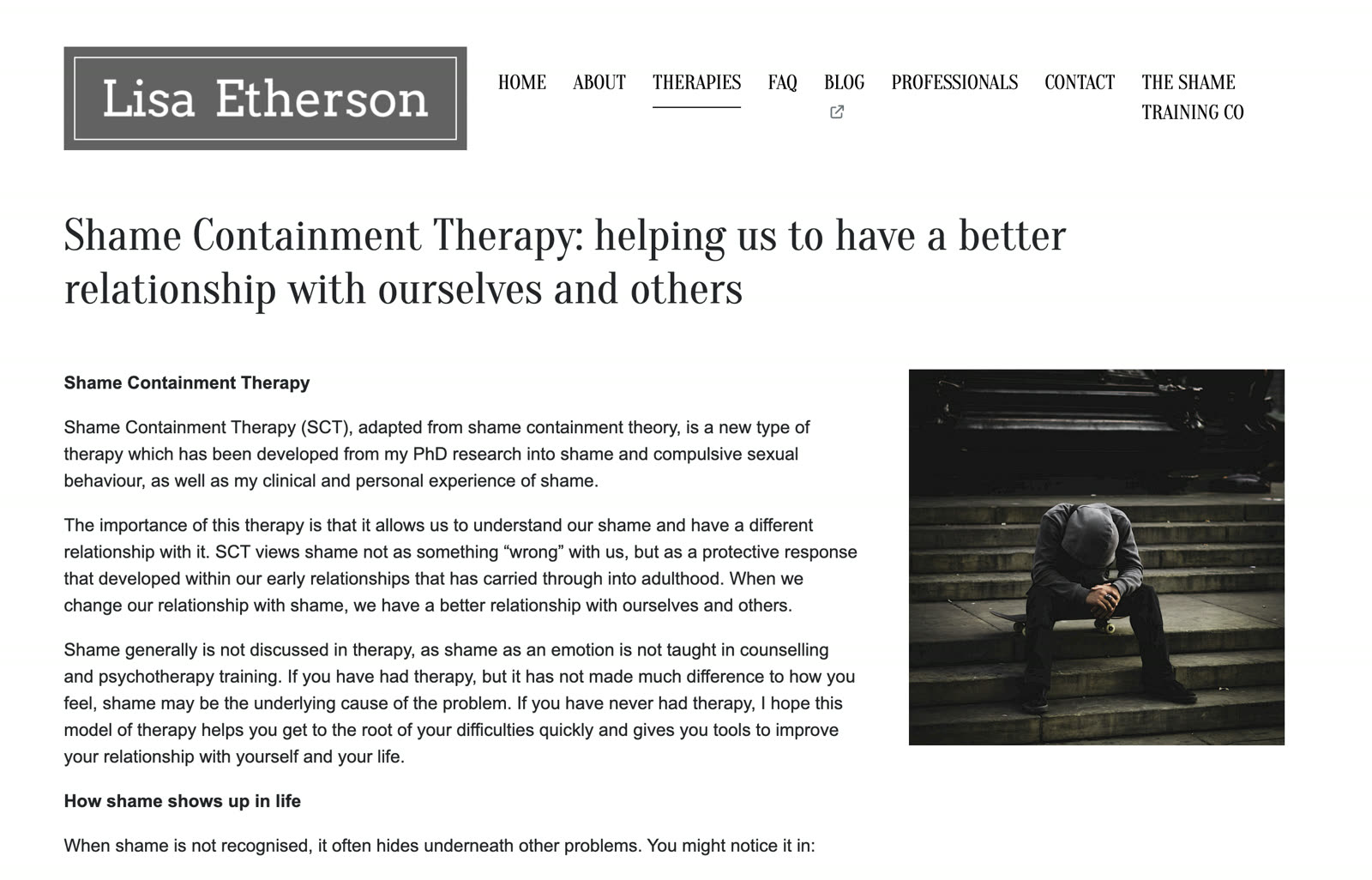
Shame Containment Theory is a model developed by psychotherapist and researcher Lisa Etherton that views shame as a protective, attachment-linked response that can become stuck and shape how we relate to ourselves and others. It offers a clear way to understand how shame develops and why it can drive patterns like withdrawal, self-criticism, or defensiveness, especially when it remains unacknowledged.
Visit Lisa's website here (opens in a new tab). You can also read more about Shame Containment Theory in: Etherton, L. (2023) 'Shame containment theory - a new approach to shame', New Directions in Psychotherapy and Relational Psychoanalysis, Vol. 17, December 2023, pp. 141-154 - open access, available here (opens in a new tab). You can view Lisa's TEDx Talk, released in March 2026, here (opens in a new tab).
Existing literature on shame in the veterinary professions
Shame has been written about and referenced within veterinary literature and research. We have gathered a number of sources here, for those who are interested:
Elwood, C. (2026) 'Shame, Motivation, Medicine and Me', in Skipper, A., Serlin, R. and Gray, C. (eds) An Introduction to Veterinary Humanities. Abingdon: Routledge, pp. 25-38.
A first person chapter on shame written from inside the veterinary professions, exploring how shame sensitivity can drive achievement, professional identity and the avoidance of criticism, and how self compassion and relationships can loosen its hold. It sits within the first textbook introducing veterinary humanities to the profession.
Gibson, J., White, K., Mossop, L., Oxtoby, C. and Brennan, M. (2022) 'We're gonna end up scared to do anything': A qualitative exploration of how client complaints are experienced by UK veterinary practitioners. Veterinary Record, e1737.
This study identifies shame as a core emotional response to client complaints, with practitioners describing feelings of guilt, self-doubt and humiliation. The fear of public shaming via social media and regulatory proceedings was found to compound distress, contributing to defensive practice and professional disengagement.
Muldoon, J.C. and Williams, J.M. (2024) Why are some people in the UK reluctant to seek support for their pets? Animal Welfare, 33, e25, pp. 1-10.
Shame emerges as a central barrier to help-seeking among pet owners, with participants describing embarrassment, fear of judgement and a sense of personal failure when needing support. The study identifies 'entangled shame' as a systemic issue, where societal stigma around poverty and receiving charitable support prevents people from accessing vital services for their animals.
Oxtoby, C. and Mossop, L. (2019) Blame and shame in the veterinary profession: barriers and facilitators to reporting significant events. Veterinary Record, 184(16), p. 501.
Shame is positioned alongside blame as a defining feature of veterinary professional culture that inhibits the reporting and discussion of clinical errors. Participants described mistakes as 'a naughty secret' and reported feelings of guilt, humiliation and fear, with the prevailing blame-and-shame culture identified as a fundamental barrier to building a learning culture within practice.
Paton, M.W., Kalemtzaki, E., Stoewen, D., Hameedunisha, T., Yang, H., Donlin, J. and Endenburg, N. (2024) WSAVA professional wellness guidelines. Journal of Small Animal Practice, 65(3), pp. 153-175.
These global guidelines reference shame in the context of perfectionism as a psychological factor influencing veterinary mental health, noting that perfectionism causes feelings of failure, guilt, shame and low self-esteem. The guidelines also address stigma around mental illness as a barrier to help-seeking, where the need for 'helpers' to seek help may engender shame and worry about career implications.
Stoewen, D.L. (2015) Suicide in veterinary medicine: Let's talk about it. The Canadian Veterinary Journal, 56(1), pp. 89-92.
Shame is discussed in relation to the stigma surrounding mental illness and help-seeking within the veterinary profession, where admitting vulnerability may be perceived as weakness. The article identifies this shame-driven reluctance to seek support as a factor that enables suicide planning by reducing help-seeking behaviour.
Williamson, V., Murphy, D. and Greenberg, N. (2022) Veterinary professionals' experiences of moral injury: A qualitative study. Veterinary Record, e2181.
Shame is identified as one of the primary emotional responses to potentially morally injurious events in veterinary practice, alongside guilt, anger and self-loathing. Participants described lasting feelings of inadequacy and low self-worth following events such as convenience euthanasia, workplace bullying and being inadequately supported as new graduates.
Podcast Episodes
We've compiled some of our favourite podcast episodes that centre around the topic of shame.
Shame - Episode 27, Conversations about Arts, Humanities and Health
With Professor Luna Dolezal and Professor Will Bynum.
Shame is a common human experience, and it can also be a complex and emotive one. Sometimes reading about shame, or recognising it in ourselves, colleagues, or clients, stirs up feelings that feel hard to carry alone. If that is true for you, support is available, and it can take many different forms.
We would always encourage seeking support from appropriately trained professionals (for example your GP, NHS services, a therapist/counsellor on a recognised register, or a specialist support service). This page is here to signpost you to options inside and outside the profession. Please note this is not an exhaustive or directive list of options.
If you are in immediate danger
Call 999 (UK) or go to A&E.
Support within the veterinary professions (UK and Ireland)
For many people, ongoing support with shame can look like working with a qualified therapist or counsellor. In the UK, one way to find a properly registered practitioner is via the BACP Therapist Directory (opens in a new tab), which explains what to look for and why it matters. You may also find support through: your GP, NHS talking therapies (where available locally), occupational health or an Employee Assistance Programme (EAP) if you have access, and clinical supervision (common in helping professions, and increasingly relevant in vetmed too).
Global signposting
If you are outside the UK and Ireland, the quickest way to find reputable, local options is a verified directory: Find A Helpline (opens in a new tab) (search by country and topic, includes phone, text, chat options).
Have something to share?
We welcome reflections and lived experience from anyone in veterinary medicine.
 Shame and VetMed